Leak check
A proxy only helps if websites see the proxy and nothing else. The leak check tests that in about 40 seconds, from inside the profile, the way a website would.
Run it
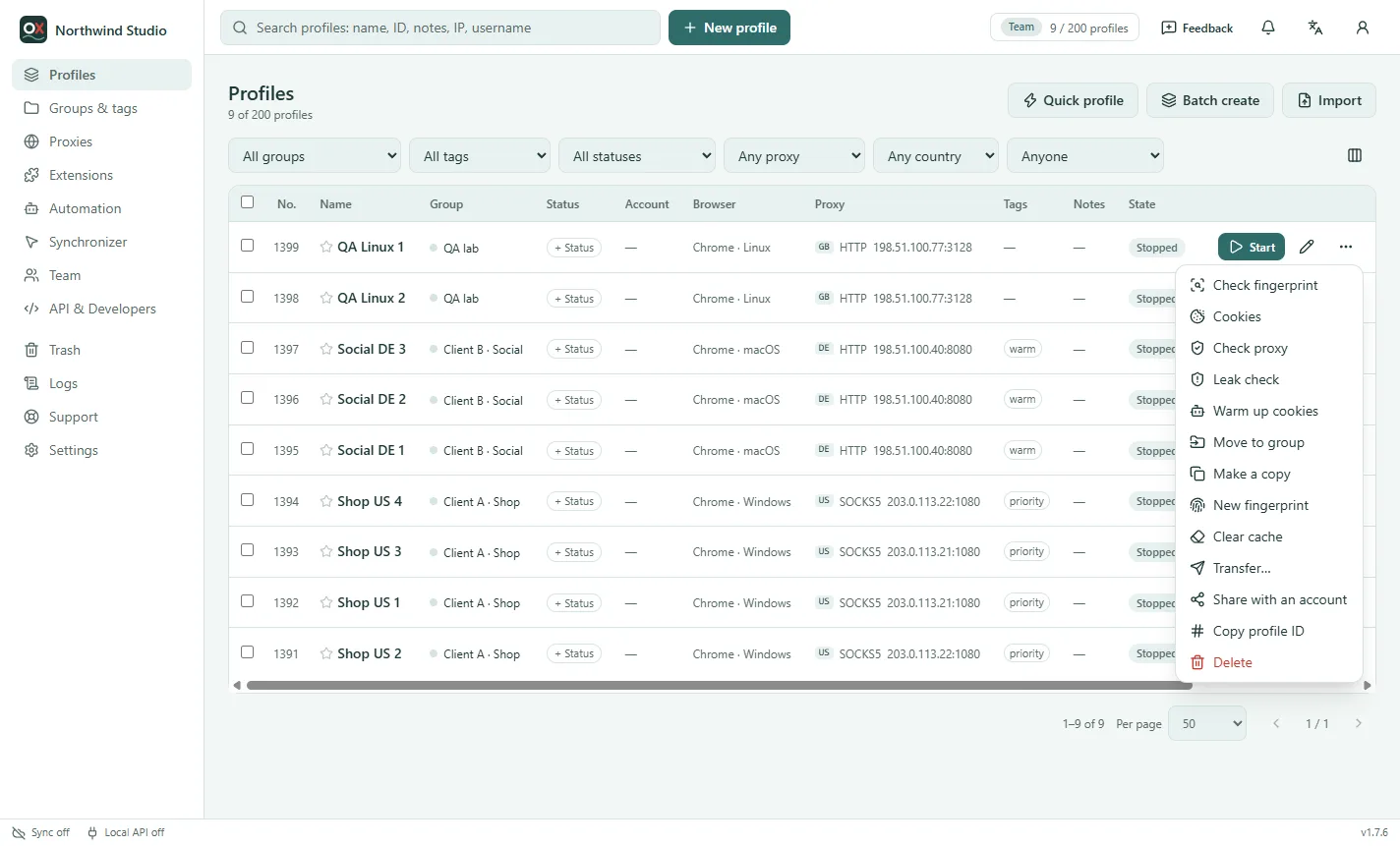
In the profile list, open the profile's menu (⋯) and choose Leak check. The first-run guide offers it too. The profile opens if it is closed; a tab opens in it and closes again when the check is done.
What it checks
| Test | Passes when |
|---|---|
| Sites | Several IP services see the proxy's IP, not this computer's |
| IPv6 | IPv6 doesn't show this computer's address (or the computer has none) |
| WebRTC | No address of this computer is shown — also no local network address |
| DNS | Names are looked up through the proxy, not by this computer's own DNS server |
| Headers | The proxy doesn't pass your IP on (X-Forwarded-For and similar) |
| Direct connections | The browser talked only to the proxy, over TCP and UDP (Windows) |
To compare, the check looks up this computer's own public address directly. It is shown only to you, on this computer, and sent nowhere else.
Reading the result
- No leaks: sites see only the proxy — every test passed.
- Leak found — the line in red says which address was seen and where. Most often:
- WebRTC shows this computer's own IP: the profile's WebRTC setting is Real. Set it to Through the proxy only (Fingerprint settings).
- DNS resolved by this computer's own DNS server: use a SOCKS5 proxy (names then go through the proxy), or a proxy provider that resolves names on its side.
- The proxy passes this computer's IP on: a "transparent" proxy. Use another proxy; this one tells every site who you are.
- Not every test could run — usually a slow proxy. Click Run again a minute later.
- This profile has no proxy — sites see this computer's own IP, as expected.
Copy result copies the result with your own IP hidden, ready to paste into a support question.
Before every release
The same check runs on every browser engine and every proxy type before each version of the app is published. A version isn't built if anything leaks.